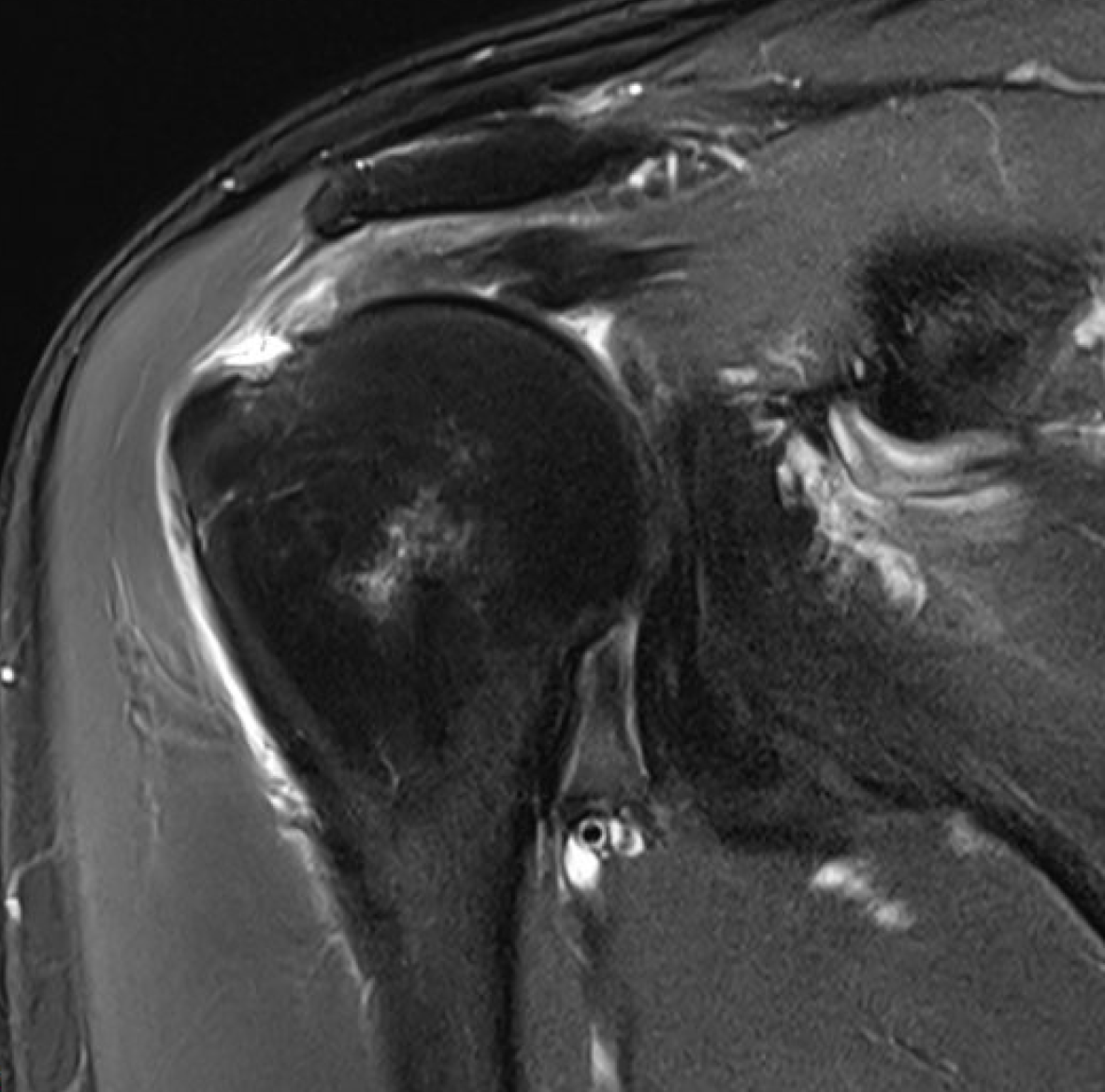
What is a rotator cuff tear?
A rotator cuff tear is a common shoulder injury, especially in adults over 40. The rotator cuff is a group of four muscles and tendons that help lift and rotate your arm and keep your shoulder stable. Tears can happen from wear and tear over time (degenerative) or from a sudden injury (traumatic).[1]
Types of Rotator Cuff Tears
• Partial-thickness tear: Only part of the tendon is torn. The tendon is still attached to the bone, but the tear may be on the top, bottom, or within the tendon itself.[8]
• Full-thickness tear: The tendon is completely torn, sometimes pulling away from the bone. This can involve one or more of the rotator cuff tendons.
• Tears are also described by their size (small, medium, large, massive) and which tendons are involved. Larger tears or tears involving multiple tendons may cause more weakness and loss of function.[7-8]
Symptoms
• Shoulder pain, especially when lifting or reaching
• Weakness in the arm
• Trouble sleeping on the affected side
• Sometimes, clicking or popping with movement
Diagnosis
Doctors use a combination of physical examination and imaging tests to diagnose rotator cuff tears. MRI or ultrasound are the most common imaging tests to see the size and location of the tear.[6][8]
Non-Operative Treatments
Most rotator cuff tears are first treated without surgery, especially if the tear is small or symptoms are mild. Non-operative treatment includes:
• Physical therapy: Exercises to strengthen shoulder muscles, improve motion, and correct posture. Therapy focuses on restoring range of motion, strengthening the rotator cuff and shoulder blade muscles, and improving shoulder control. Most people see less pain and better function after 3-6 months of therapy.[1-2][4][6]
• Medications: Acetaminophen or NSAIDs (like ibuprofen) for pain. NSAIDs should be used with caution, especially in older adults.[1][3]
• Steroid injections: May help with short-term pain, but are not a long-term solution.[3][6]
• Activity changes: Avoiding movements that worsen pain.
Non-operative treatment works well for many people, especially those with smaller tears or less severe symptoms. However, tears may get bigger over time, and some people may eventually need surgery. Studies show that physical therapy can improve pain and function, but tears may enlarge and muscle quality may worsen over years if not repaired.[4]
Operative Treatments
Surgery is considered if:
• Symptoms do not improve with therapy
• The tear is large or involves multiple tendons
• The tear is from a sudden injury (especially in younger or active people)
• There is significant weakness or loss of function[1][3]
Most rotator cuff surgeries are done arthroscopically (using small incisions and a camera). The torn tendon is repaired and reattached to the bone. Sometimes, open surgery is needed for very large or complex tears.[1-3][8]
Types of Surgical Fixation
• Anchors: Small devices placed in the bone to hold the tendon in place. These can be metal or dissolvable.
• Single-row or double-row repair: Refers to how many rows of anchors are used to secure the tendon. Double-row repairs may provide stronger fixation for larger tears.
• Transosseous or transtendinous techniques: Different ways to pass sutures through the tendon and bone.
• Debridement: For some partial tears, the surgeon may clean up (debride) the damaged tissue rather than repair it.
• Biologic supplements: Sometimes, biologic materials are used to help healing, but their long-term benefit is still being studied.[2][8]
Typical Postoperative Course
• First few weeks: The arm is usually in a sling to protect the repair. You may be allowed gentle hand and wrist movement.
• Physical therapy: Starts with gentle motion, then progresses to strengthening over several months. Therapy is essential for regaining motion and strength.
• Recovery: Most people return to normal activities in 4-6 months, but full recovery can take up to a year. It is important to follow the rehabilitation plan closely.
• Complications: Stiffness occurs in about 10% of patients but usually improves with therapy. Serious complications like infection or blood clots are rare.[1]
• Long-term outcomes: Both non-operative and operative treatments can lead to good results. Surgery may be more successful for younger patients, those with smaller tears, and those who do not improve with therapy. For traumatic tears, early surgery is recommended to prevent muscle degeneration and tendon retraction.[1][4][7]
Summary
Rotator cuff tears are common and can be managed with physical therapy, medications, and sometimes surgery. The best approach depends on your age, activity level, tear type, and personal goals. Talk with your healthcare provider about which option is right for you.[1-8]
References
Degenerative Rotator-Cuff Disorders.
Jain NB, Khazzam MS. The New England Journal of Medicine. 2024;391(21):2027-2034. doi:10.1056/NEJMcp1909797.
Diagnosis and Management of Partial Thickness Rotator Cuff Tears: A Comprehensive Review.
Plancher KD, Shanmugam J, Briggs K, Petterson SC. The Journal of the American Academy of Orthopaedic Surgeons. 2021;29(24):1031-1043. doi:10.5435/JAAOS-D-20-01092.
Outcomes of Initial Nonoperative Treatment of Traumatic Full-Thickness Rotator Cuff Tears.
Kane LT, Luthringer T, Vaughan A, et al. Journal of Shoulder and Elbow Surgery. 2024;33(7):1586-1592. doi:10.1016/j.jse.2023.11.012.
Nonoperative Treatment of Rotator Cuff Tears.
Dickinson RN, Kuhn JE. Physical Medicine and Rehabilitation Clinics of North America. 2023;34(2):335-355. doi:10.1016/j.pmr.2022.12.002.
Jain NB, Ayers GD, Koudelková H, et al. JAMA Network Open. 2019;2(8):e199050. doi:10.1001/jamanetworkopen.2019.9050.
Management of Rotator Cuff Injuries: Evidence-Based Clinical Practice Guideline.
Gregory A. Brown MD PhD, Stephen Weber MD, Jaskarndip Chahal MD, et al American Academy of Orthopaedic Surgeons (2025)
Selected Issues for the Master Athlete and the Team Physician: A Consensus Statement.
Kibler WB, Putukian M. Medicine and Science in Sports and Exercise. 2010;42(4):820-33. doi:10.1249/MSS.0b013e3181d19a0b.
Surgery for Rotator Cuff Tears.
Karjalainen TV, Jain NB, Heikkinen J, et al. The Cochrane Database of Systematic Reviews. 2019;12:CD013502. doi:10.1002/14651858.CD013502.